What Happens If You Refuse a Breathalyzer? DUI Refusal Laws Explained
Alex Harmon · Updated June 2026 · Reviewed for accuracy
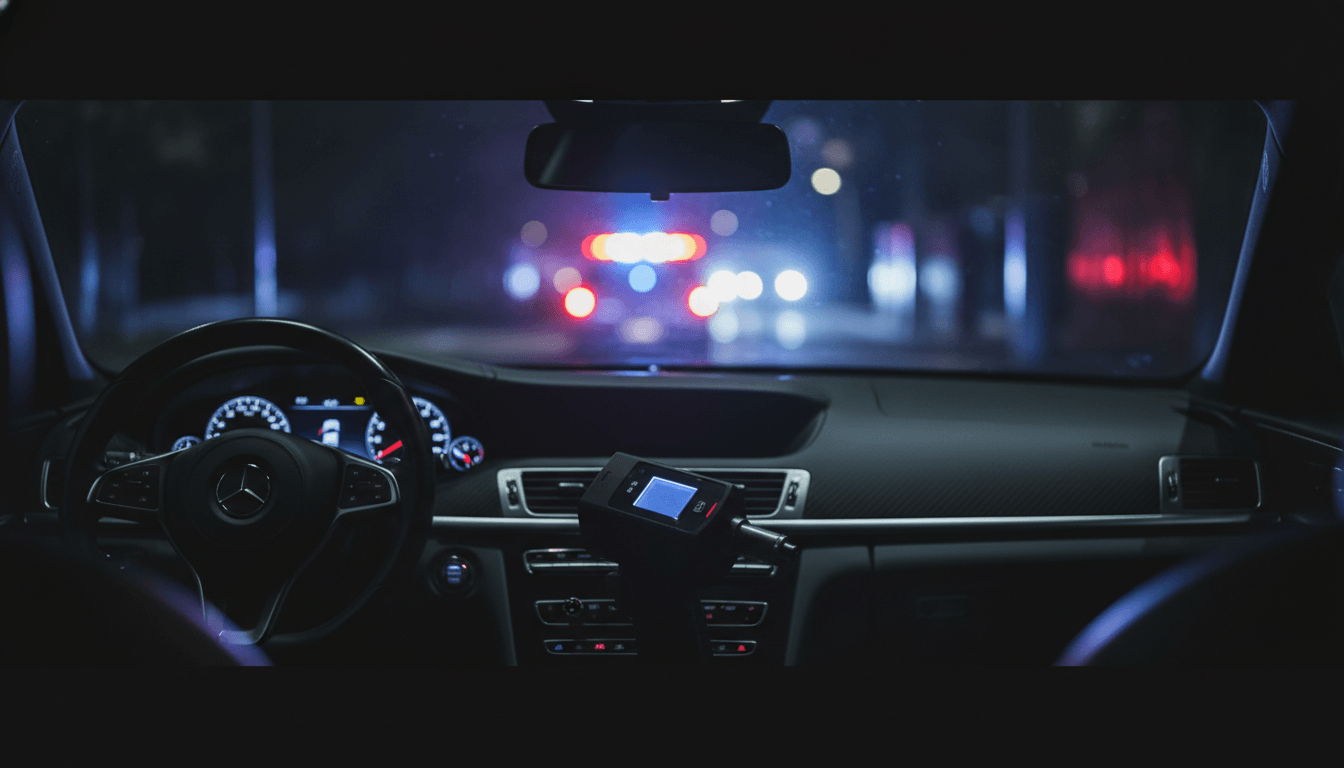
A police officer pulls you over, suspects you've been drinking, and asks you to blow into a breathalyzer. Your first instinct might be to refuse — no test, no evidence, right? It sounds logical. In practice, it usually makes things significantly worse. Here's what actually happens when you say no, and why the strategy backfires in most US states and countries worldwide.
What Is Implied Consent — And Why Does It Matter?
Every US state has an implied consent law on the books. The basic idea is simple: the moment you get behind the wheel on a public road, you've already given your legal consent to chemical testing if law enforcement has reasonable cause to believe you're impaired. You agreed to this when you applied for your driver's license — it's buried in the fine print most people never read.
This isn't unique to the US. The UK, Australia, Canada, and most of Europe operate under the same principle. You don't get to opt out of chemical testing after the fact just because you've decided you'd rather not. The law treats refusal as a violation of an agreement you already made.
What Happens the Moment You Refuse
Refusing a breathalyzer sets off two separate legal processes — administrative and criminal — and both can run simultaneously against you.
Immediate License Suspension (ALR)
In most states, the officer will confiscate your physical license on the spot and issue a temporary driving permit. An Administrative License Revocation (ALR) kicks in automatically, completely separate from any criminal court proceedings. You don't need to be convicted of DUI — the refusal alone is enough to lose your license.
Suspension lengths for refusal are typically longer than what you'd get for a first DUI offense:
- First refusal: 1 year in most states; up to 18 months in states like Texas and Florida
- Second refusal: 2–3 years in many jurisdictions
- Commercial drivers: CDL disqualification for 1 year on first refusal, lifetime disqualification on second
You typically have a short window — often 7 to 15 days — to request a hearing to contest the suspension. Miss that window and the suspension becomes automatic.
Refusal as Evidence of Guilt in Court
Here's the part most people don't realize: prosecutors can and will tell the jury that you refused. Courts allow this under the "consciousness of guilt" doctrine — the idea being that innocent people generally don't refuse to provide evidence that would exonerate them. A 2018 study of DUI cases found that juries were significantly more likely to convict defendants who had refused chemical testing, even when the prosecution had no BAC number to present.
States Where Refusal Is a Separate Crime
In most states, refusal is a civil violation that triggers the administrative penalties described above. But several states treat it as a criminal offense on top of everything else:
- Nevada: First refusal is a misdemeanor; second is a gross misdemeanor with up to 364 days in jail
- Alaska: Refusal can be charged as a separate criminal offense
- Vermont: Refusal is a civil violation but courts allow a mandatory blood draw in certain circumstances
- Tennessee: First refusal is treated as a civil matter; repeat offenders face criminal exposure
- Kansas: Prosecutors must prove refusal "beyond a reasonable doubt" — a higher standard than most states
Warrant-Based Blood Draws: The Missouri v. McNeely Question
In 2013, the Supreme Court ruled in Missouri v. McNeely that the natural dissipation of alcohol in the blood does not constitute an automatic "exigent circumstance" allowing warrantless blood draws. In plain English: police generally need to get a warrant before taking your blood by force.
However, "generally" is doing a lot of work in that sentence. Many states have carved out exceptions. If you're involved in an accident with injuries, or if you have a prior DUI conviction, officers in many jurisdictions can compel a blood draw without a warrant. Some states have passed "no-refusal" laws that allow judges to issue telephonic warrants within minutes, making the delay argument nearly moot.
How Other Countries Handle Refusal
The US is actually fairly lenient compared to some other jurisdictions:
- United Kingdom: Refusing a breathalyzer is a criminal offense carrying up to 6 months in prison, an unlimited fine, and mandatory driving disqualification — the same penalties as a DUI conviction itself
- Australia: Automatic disqualification and significant fines; repeat refusers face jail time in several states
- France: Up to two years imprisonment and a €4,500 fine for refusal
- Canada: Criminal offense with mandatory minimum fines and license suspension
Is It Ever Worth Refusing?
DUI defense attorneys disagree on this, but the consensus for most first-time situations is: no, refusal rarely helps and often makes things worse. Here's the realistic math:
If you take the test and fail, you face a DUI charge with a BAC number as evidence. If you refuse, you face the same DUI charge (police still have probable cause to arrest you), plus a license suspension that may be longer than what a first DUI carries, plus a jury who will hear that you refused to cooperate. You've potentially added problems without removing the original one.
The situations where refusal might make strategic sense are narrow: if you believe the breathalyzer is malfunctioning, if you have a documented medical condition that affects breath test results, or if you're in a jurisdiction with specific procedural requirements the officer hasn't followed. In those cases, the better move is still to take the test and challenge the results in court with your attorney — not to refuse on the roadside.
What to Do Instead of Refusing
- Comply with the breathalyzer but explicitly request a blood test afterward if you believe the breath result is inaccurate
- Say as little as possible beyond what is legally required — you have a right to remain silent about circumstances
- Ask to speak with an attorney before answering questions
- Note the time, location, equipment model number, and officer badge number
- Do not argue your case at the roadside — that's what court is for
Know Where You Stand Before You Drive
The best way to avoid a breathalyzer situation entirely is to know your estimated BAC before you get in the car. Use our free calculator to see where you stand based on what you've had to drink.
CHECK MY ESTIMATED BACFrequently Asked Questions
Can I legally refuse a breathalyzer test?
You can physically refuse, but you cannot do so without consequences. Implied consent laws in every US state mean that by driving on public roads you've already agreed to chemical testing. Refusing triggers immediate Administrative License Revocation (ALR) — typically 1 year for a first refusal — regardless of whether you're ever convicted of DUI. In some states like Nevada and Alaska, refusal is also a separate criminal offense.
Will refusing a breathalyzer hurt my court case?
Almost certainly yes. Prosecutors are allowed to tell the jury you refused, and courts permit them to argue this shows "consciousness of guilt." Studies of DUI jury outcomes show that juries convict at higher rates when defendants refused testing. You've essentially removed the possibility that the test would come back under the legal limit, while giving the prosecution a damaging narrative to work with.
What is implied consent and how does it apply to me?
Implied consent is the legal principle that says you agreed to submit to chemical testing when you accepted your driver's license and chose to drive on public roads. You didn't sign anything at the roadside — the agreement is implied by your choice to drive. This doctrine exists in all 50 US states and in most countries that have DUI laws. It means police don't need your active consent to require a breath or blood test if they have reasonable cause to suspect impairment.
Can police force a blood draw if I refuse?
After Missouri v. McNeely (2013), police generally need a warrant for a non-consensual blood draw. However, many states have emergency exceptions — particularly if there's been an accident with injuries or if you have prior DUI convictions. Some states have "no-refusal" weekends where judges are on standby to issue telephonic warrants within minutes. So while refusing the breathalyzer might delay a test, it often doesn't prevent one.
Is refusing a breathalyzer worse than a DUI?
In many cases, the refusal penalties are comparable to or worse than a first-offense DUI. A first DUI might carry a 90-day license suspension in some states; refusal often carries a 12-month suspension in the same state. You also still face the DUI charge itself, and now you've given the jury the refusal to consider on top of everything else. There are limited situations where refusal might be strategically beneficial, but this is a question for a DUI attorney in your specific jurisdiction — not a roadside decision.
Facing a DUI Charge?
A DUI conviction costs $10,000–$25,000 on average. An experienced DUI attorney may be able to challenge the breathalyzer result, question the stop, or negotiate reduced charges — potentially saving far more than their fee.
FIND A DUI ATTORNEY →Use our DUI Cost Calculator to estimate your total costs.
Know Your BAC Before You Drive
Personal breathalyzers give you an accurate reading in seconds. The BACtrack Mobile connects to your phone and uses the same fuel cell technology as law enforcement devices.
CHECK PRICE ON AMAZON →As an Amazon Associate we earn from qualifying purchases.